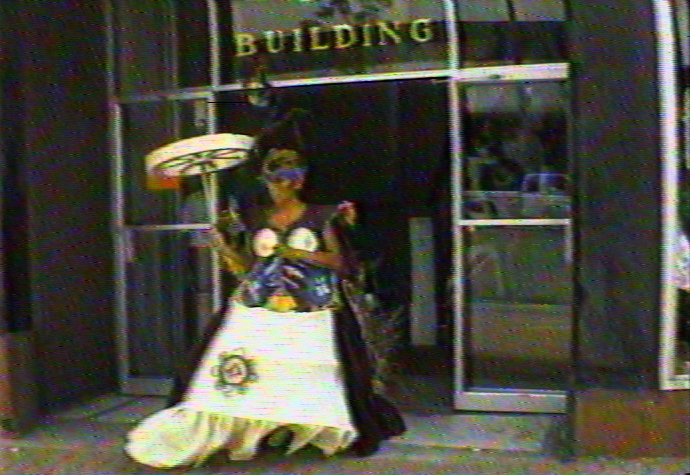
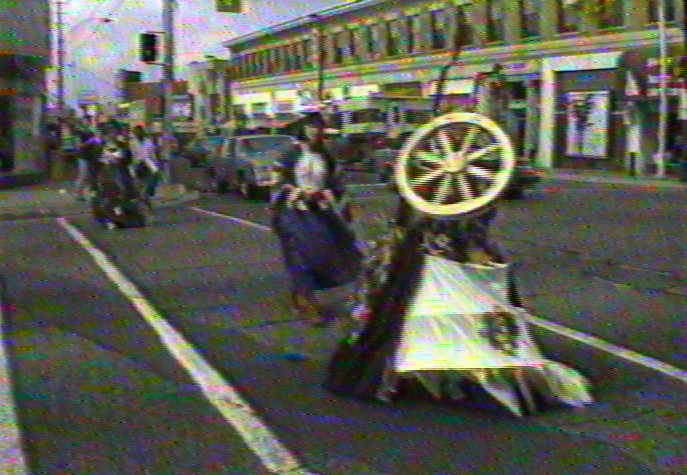
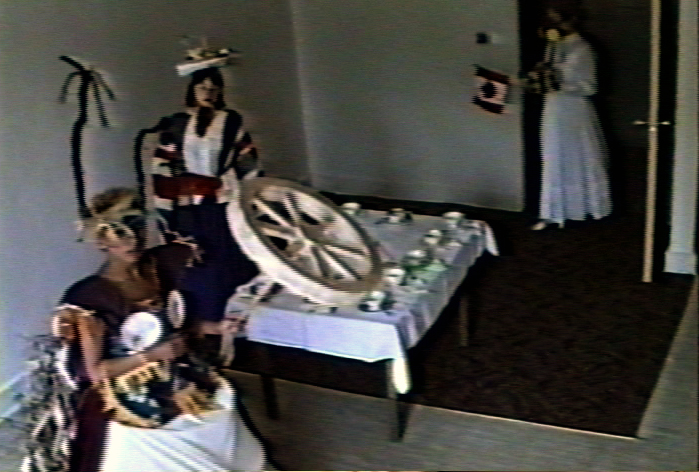
1987 / Definitely Superior Art Gallery, Thunder Bay, ON
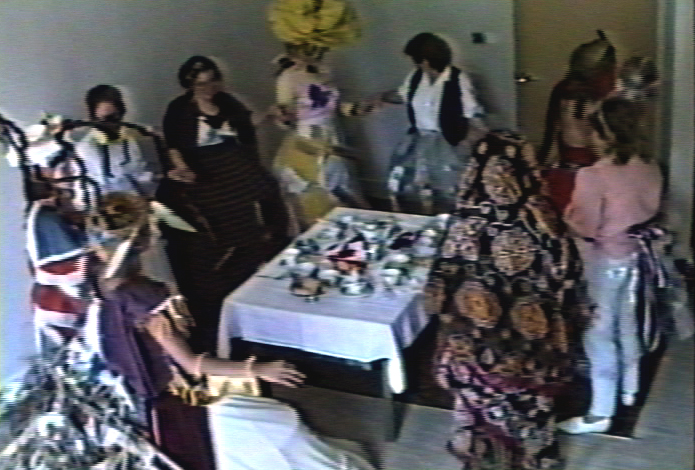
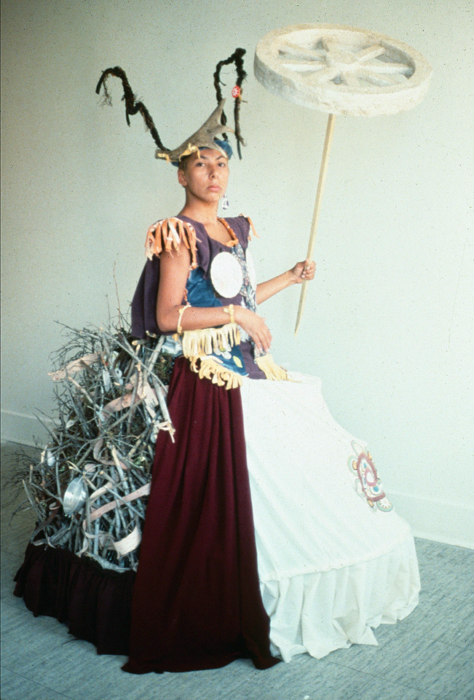
Belmore wore the dress in Twelve Angry Crinolines, a parade organized by Lynne Sharman as an acerbic, but playful rejoinder to the parallel celebrations welcoming the Duke and Duchess of York on their official visit to Thunder Bay in the summer of 1987. With Pocahantas braids held aloft like antenna, a warrior maiden’s breastplate made of two fine English porcelain saucers, buckskin fringed epaulets and beadwork embellishing its bodice, this robe is all about appearances. Behind its decorative façade protrudes an unruly beaver dam bustle with royalty memorabilia and trade objects (silver flatware, kitsch souvenir mugs, and so on) caught in the dense weave of branches and twigs.
Jessica Bradley, Caught in the Act: an anthology of performance art by Canadian women, YYZ Books, 2004
Video credit: Definitely Superior Art Gallery
Category: Performances
Howuh!
1988 / Definitely Superior Art Gallery, Thunder Bay Indian Friendship Centre, Thunder Bay, ON
In 1987, Belmore heard “Thom E. Hawke & the Pineneedles” on CBC’s late night radio program called Brave New Waves. She invited the band to Thunder Bay to workshop with local Indigenous participants for a period of one week, with the intention of mounting a performance of the newly created spoken word pieces and songs at the Indian Friendship Centre’s Satellite Community Centre. Belmore wrote a tune titled “Trauma Mama” during this workshop. Howuh! is an Anishinaabe expression of amazement or excitement, at another’s or one’s own actions.
Video credit: Hamish Pelletier
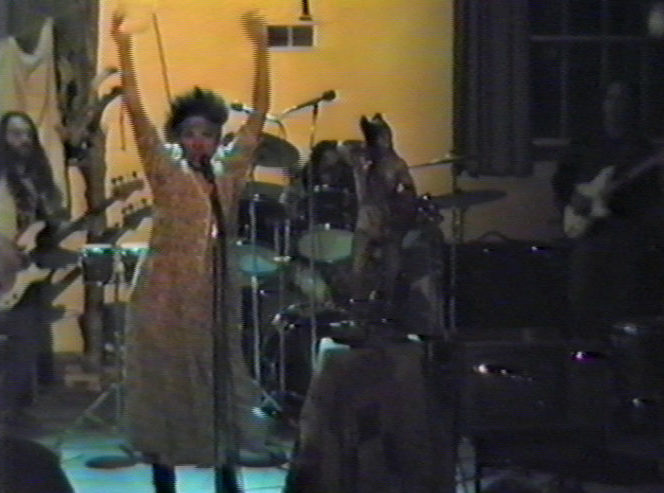
In 1987, Belmore heard “Thom E. Hawke & the Pineneedles” on CBC’s late night radio program called Brave New Waves. She invited the band to Thunder Bay to workshop with local Indigenous participants for a period of one week, with the intention of mounting a performance of the newly created spoken word pieces and songs at the Indian Friendship Centre’s Satellite Community Centre. Belmore wrote a tune titled “Trauma Mama” during this workshop. Howuh! is an Anishinaabe expression of amazement or excitement, at another’s or one’s own actions.
Video credit: Hamish Pelletier
Rising to the Occasion
1987 / Definitely Superior Art Gallery, Thunder Bay, ON / Sculpture
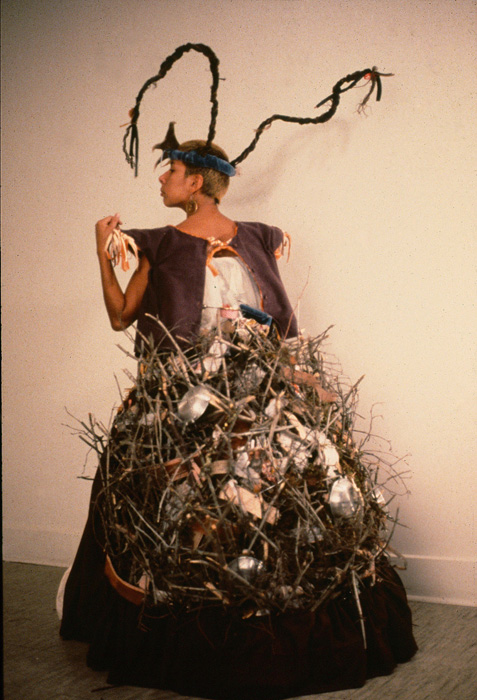
Rising to the Occasion is a sculpture and performance artifact that consists of the gown that Belmore made, and wore during the Twelve Angry Crinolines performance event. Rising to the Occasion is an ‘angry crinoline’ dress modeled on the Victorian tea gown, with a bodice incorporating two “breastplate” saucers made of English bone china and a massive satin and velvet skirt festooned with royal wedding memorabilia, and bustled with a big facsimile beaver lodge made of sticks and debris and kitchen utensils.
Rebecca Belmore draws attention to the effects of colonization on First Nations women in Rising to the Occasion with a dress that is an artifact from Twelve Angry Crinolines, and a silent parade and tea party (conceived by Lynne Sharman) staged in Thunder Bay in 1987. The parade was a response to Prince Andrew and Lady Sarah Ferguson’s visit to Canada, and the fact that, during this visit, they toured a pioneer fort and rode in a birch-bark canoe. Belmore deftly uses mixed media to combine clichés from British and First Nations culture.
Daina Augaitis and Kathleen Ritter, eds., Rebecca Belmore: Rising to the Occasion, Vancouver Art Gallery, 2008
Photo credit: Michael Beynon, Trevor Mills / Vancouver Art Gallery
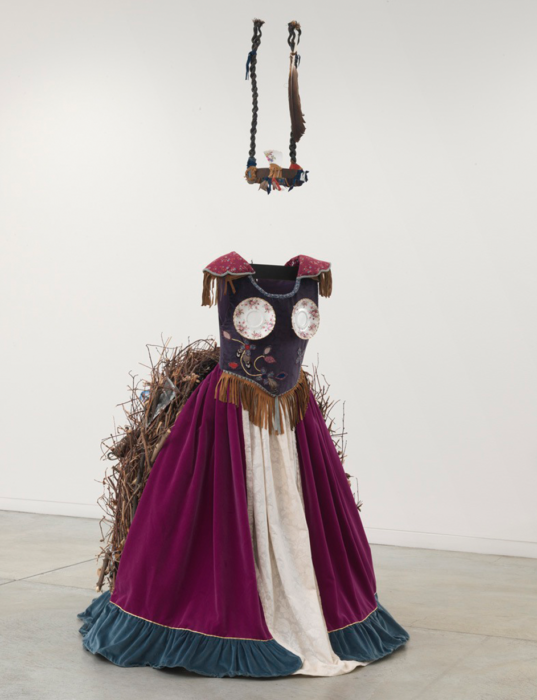
Rising to the Occasion is a sculpture and performance artifact that consists of the gown that Belmore made, and wore during the Twelve Angry Crinolines performance event. Rising to the Occasion is an ‘angry crinoline’ dress modeled on the Victorian tea gown, with a bodice incorporating two “breastplate” saucers made of English bone china and a massive satin and velvet skirt festooned with royal wedding memorabilia, and bustled with a big facsimile beaver lodge made of sticks and debris and kitchen utensils.
Rebecca Belmore draws attention to the effects of colonization on First Nations women in Rising to the Occasion with a dress that is an artifact from Twelve Angry Crinolines, and a silent parade and tea party (conceived by Lynne Sharman) staged in Thunder Bay in 1987. The parade was a response to Prince Andrew and Lady Sarah Ferguson’s visit to Canada, and the fact that, during this visit, they toured a pioneer fort and rode in a birch-bark canoe. Belmore deftly uses mixed media to combine clichés from British and First Nations culture.
Daina Augaitis and Kathleen Ritter, eds., Rebecca Belmore: Rising to the Occasion, Vancouver Art Gallery, 2008
Photo credit: Michael Beynon, Trevor Mills / Vancouver Art Gallery
Artifact #671B
1988 / Outside the Thunder Bay Art Gallery / Thunder Bay, ON
In her performance titled, Artifact #671B, she took advantage of the spectacle of the Winter Olympics held in Calgary to draw attention to the multinational company, Shell Oil. She tagged her body like an artifact in a museum, but with one important twist, one of the signatures was the Shell corporate logo, marking corporate incursion on First Nation space. In doing so, she revealed the duplicity of a company that provided corporate sponsorship of the Olympic exhibition, The Spirit Sings, which featured Canada’s First Nations people, while securing drilling rights in the territories of outstanding Lubicon Cree land claims.
Jolene Rickard, Rebecca Belmore: Performing Power, Fountain, Kamloops Art Gallery and Morris and Helen Belkin Art Gallery, 2005
Photo credit: Bill Lindsay, J. David Galway / The Chronicle Journal, January 13, 1988
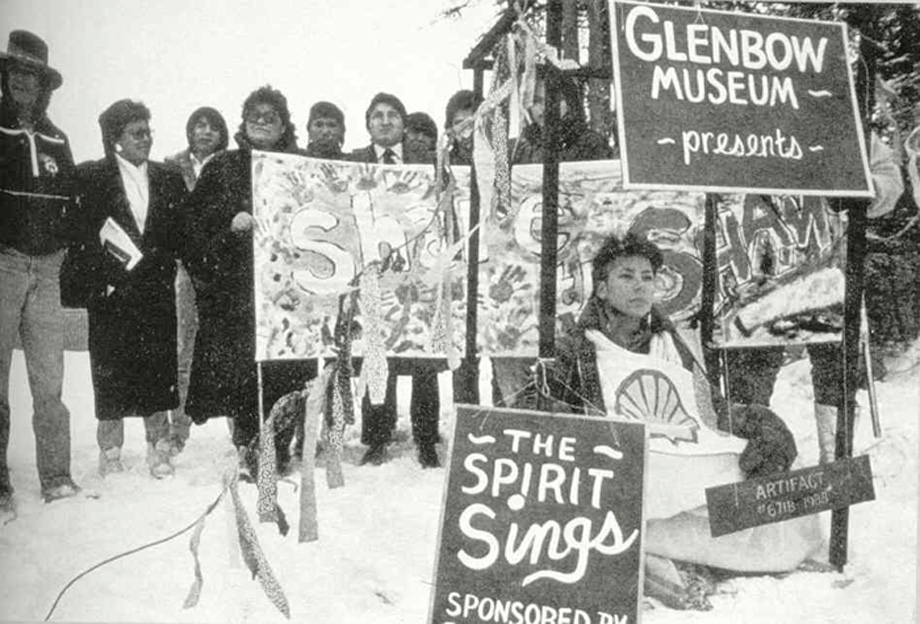
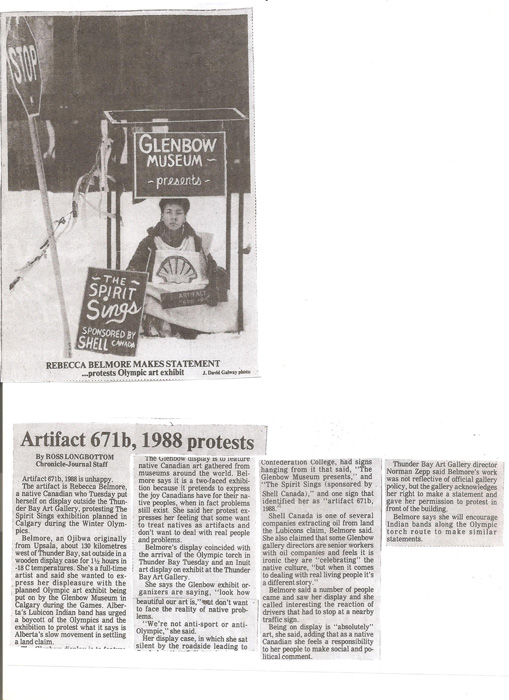
In her performance titled, Artifact #671B, she took advantage of the spectacle of the Winter Olympics held in Calgary to draw attention to the multinational company, Shell Oil. She tagged her body like an artifact in a museum, but with one important twist, one of the signatures was the Shell corporate logo, marking corporate incursion on First Nation space. In doing so, she revealed the duplicity of a company that provided corporate sponsorship of the Olympic exhibition, The Spirit Sings, which featured Canada’s First Nations people, while securing drilling rights in the territories of outstanding Lubicon Cree land claims.
Jolene Rickard, Rebecca Belmore: Performing Power, Fountain, Kamloops Art Gallery and Morris and Helen Belkin Art Gallery, 2005
Photo credit: Bill Lindsay, J. David Galway / The Chronicle Journal, January 13, 1988
Wild
2001 / The Grange, Art Gallery of Ontario, Toronto, ON / Installation / Performance
In her work Wild, which includes several performances, she takes possession of “the best bedroom.” [Her] work refers to an invisible history, in this case that of the First Nations tribes who were the earliest inhabitants of that land on which The Grange stands. Through her physical occupancy of the four-poster bed, now re-covered in hair and beaver pelts, Belmore plays the role of the unexpected and historically unwelcome guest in the most intimate room in the house. Through this work she enacts a layered redressing of history while fulfilling the fantasy of finding a comfortable, even luxurious, place to stay in a hostile world – a world that saw her ancestors as potential aggressors to be feared.
Jessica Bradley and Gillian MacKay, eds., House Guests: The Grange 1817 to Today, Art Gallery of Ontario, 2001
Photo credit: Art Gallery of Ontario
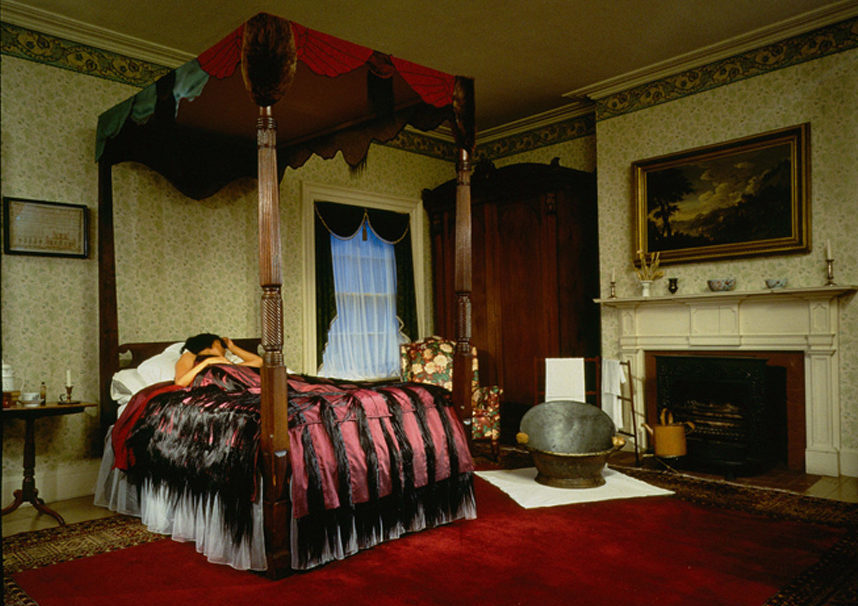
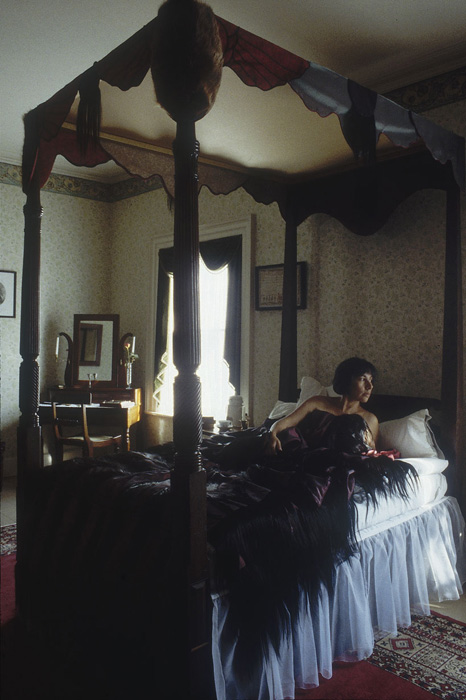
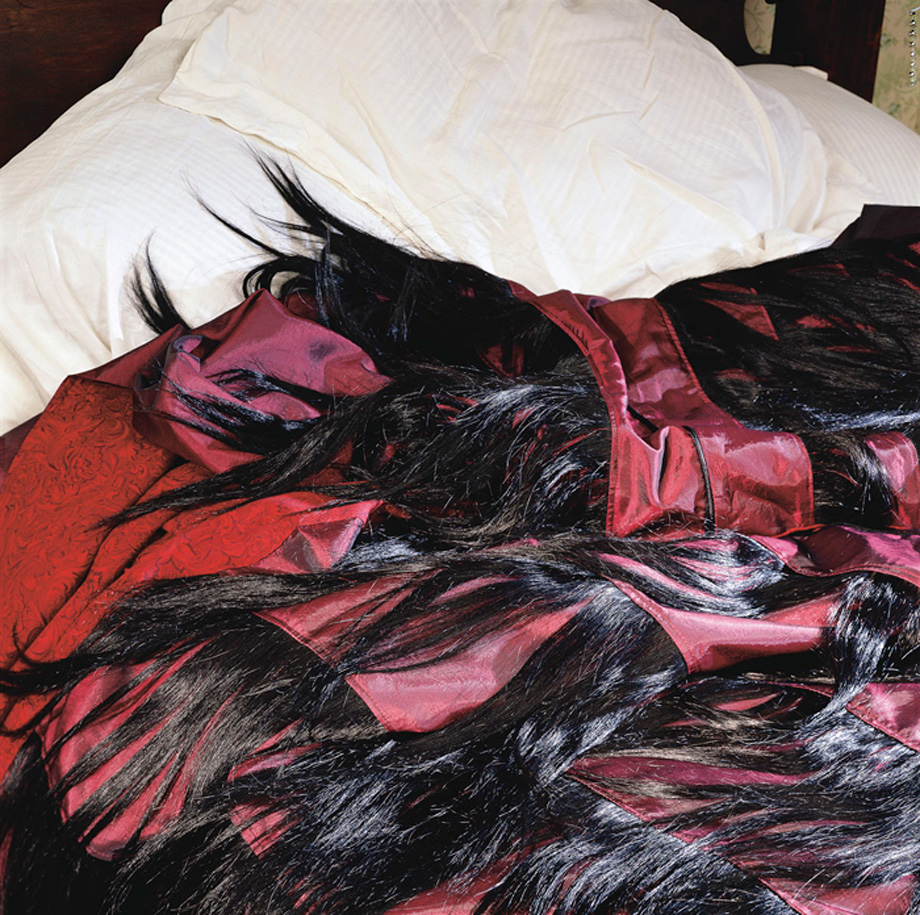
In her work Wild, which includes several performances, she takes possession of “the best bedroom.” [Her] work refers to an invisible history, in this case that of the First Nations tribes who were the earliest inhabitants of that land on which The Grange stands. Through her physical occupancy of the four-poster bed, now re-covered in hair and beaver pelts, Belmore plays the role of the unexpected and historically unwelcome guest in the most intimate room in the house. Through this work she enacts a layered redressing of history while fulfilling the fantasy of finding a comfortable, even luxurious, place to stay in a hostile world – a world that saw her ancestors as potential aggressors to be feared.
Jessica Bradley and Gillian MacKay, eds., House Guests: The Grange 1817 to Today, Art Gallery of Ontario, 2001
Photo credit: Art Gallery of Ontario
Manifesto
1999 / TIME TIME TIME, FADO Performance Inc., Zsa Zsa Gallery, Toronto, ON
From sunrise to sunset, Belmore performed a twelve-hour durational performance, Manifesto. Her goal was to write and simultaneously speak what is written. Belmore sat, wrote and spoke getting up only to sharpen pencils. As each piece of paper is filled, it was dropped to the floor. After sunset the doors were opened, the paper was piled together and placed on top of the table with a small stone on top. The audience was invited into the space to view the work. Rebecca Belmore explains, “Manifesto is a place to hear the sound of my own writing. It is a private inner place made public. I like writing. But never real writing, like a writer. Just my hand and my head working to mark down and speak beyond my body… I view this experience as a process where I have the time and space to make my thoughts into an object. The result of this performance work will be the writing, not to be read, but to exhibited as an object.”
Paul Couillard, Manifesto: Rebecca Belmore, 1999
Photo credit: Paul Couillard / FADO Performance Inc.
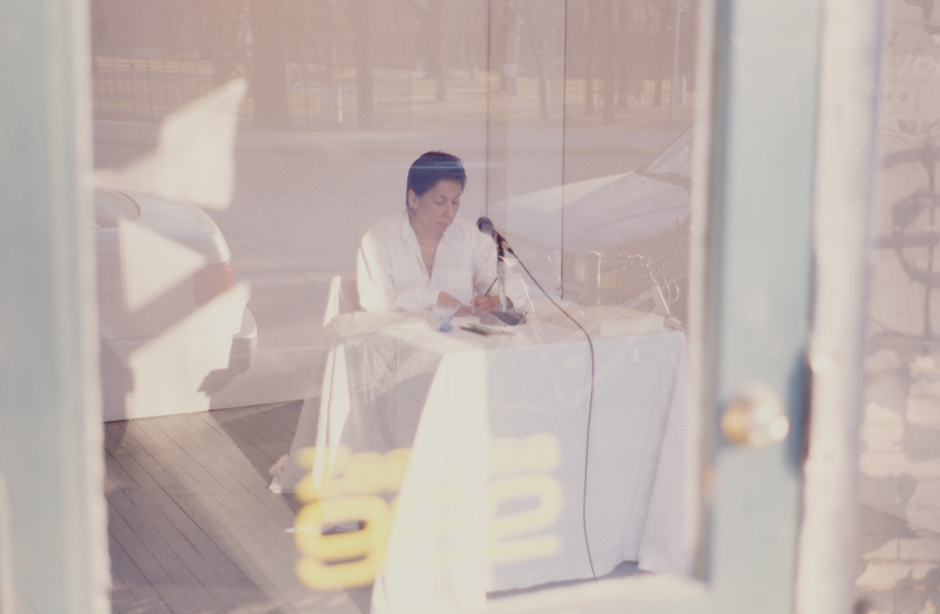

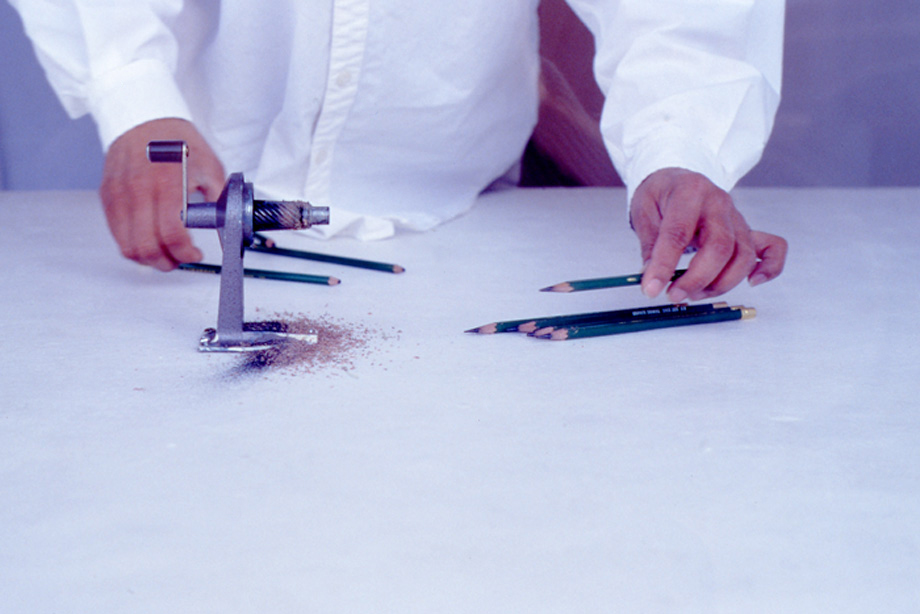
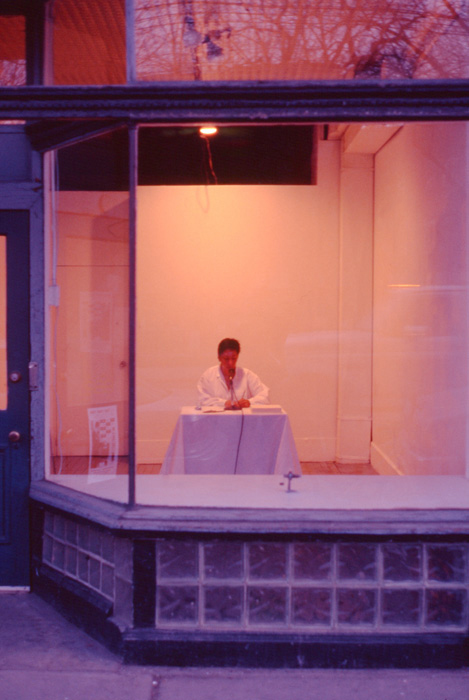
From sunrise to sunset, Belmore performed a twelve-hour durational performance, Manifesto. Her goal was to write and simultaneously speak what is written. Belmore sat, wrote and spoke getting up only to sharpen pencils. As each piece of paper is filled, it was dropped to the floor. After sunset the doors were opened, the paper was piled together and placed on top of the table with a small stone on top. The audience was invited into the space to view the work. Rebecca Belmore explains, “Manifesto is a place to hear the sound of my own writing. It is a private inner place made public. I like writing. But never real writing, like a writer. Just my hand and my head working to mark down and speak beyond my body… I view this experience as a process where I have the time and space to make my thoughts into an object. The result of this performance work will be the writing, not to be read, but to exhibited as an object.”
Paul Couillard, Manifesto: Rebecca Belmore, 1999
Photo credit: Paul Couillard / FADO Performance Inc.
The Indian Factory
2000 / High Tech Storytellers Festival, Tribe Inc., Saskatoon, SK
In The Indian Factory, performed in Saskatoon, Belmore entered space carrying a bucket of plaster, which she then applied to several men’s jackets hanging from hooks on the wall. The hollow and hardened plaster forms were an acknowledgement of Aboriginal victims of ongoing racial violence in the prairie city.
Lee-Ann Martin, The Waters of Venice: Rebecca Belmore at the 51st Biennale, Canadian Art, June 2005
Photo credit: Bradlee LaRocque / Tribe Inc.

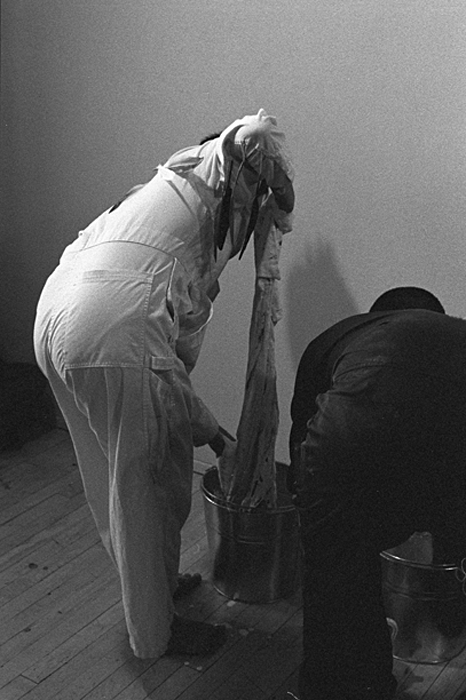
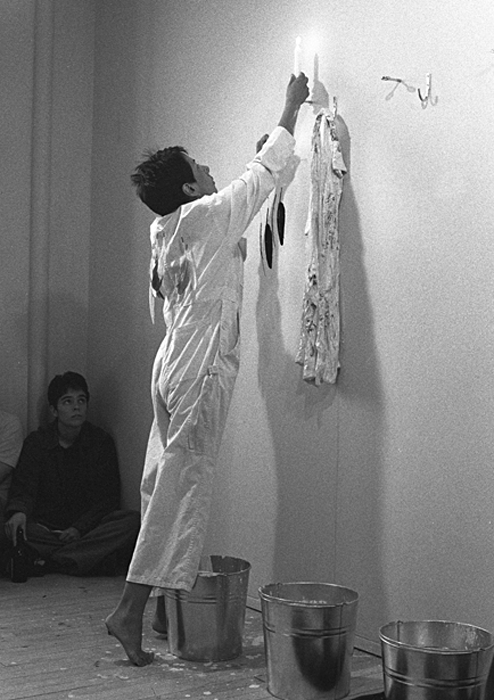
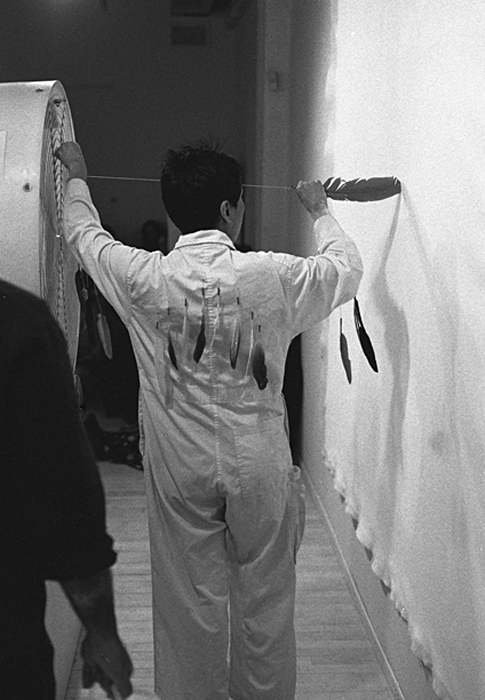
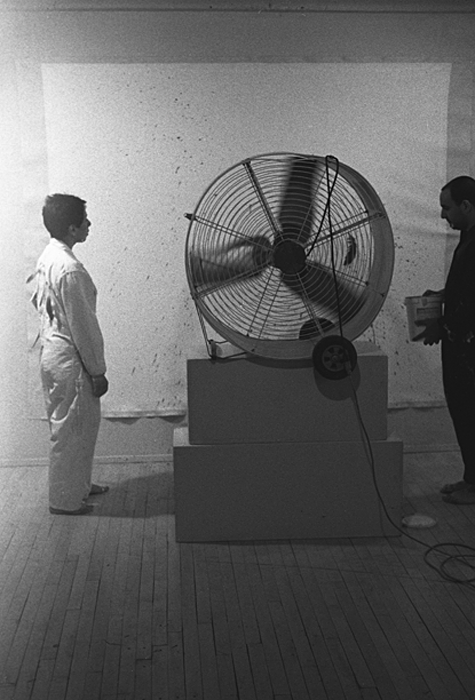
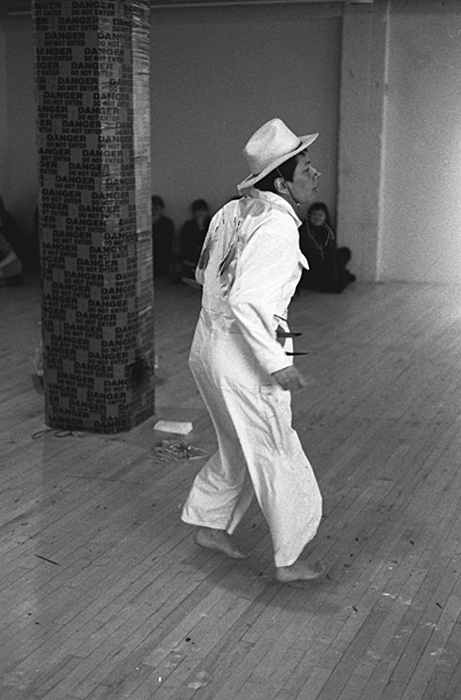
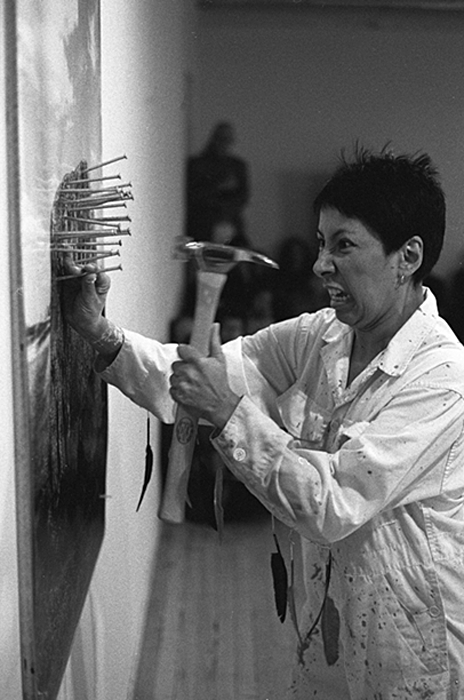
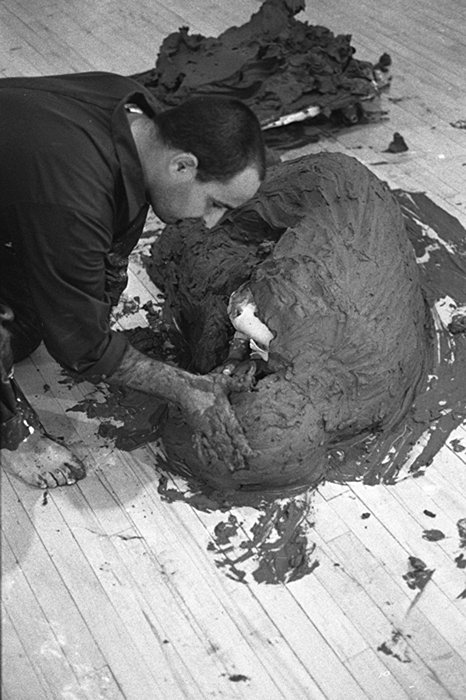
In The Indian Factory, performed in Saskatoon, Belmore entered space carrying a bucket of plaster, which she then applied to several men’s jackets hanging from hooks on the wall. The hollow and hardened plaster forms were an acknowledgement of Aboriginal victims of ongoing racial violence in the prairie city.
Lee-Ann Martin, The Waters of Venice: Rebecca Belmore at the 51st Biennale, Canadian Art, June 2005
Photo credit: Bradlee LaRocque / Tribe Inc.
For Dudley
1997 / 7a*11d International Performance Art Festival, Toronto, ON
Several performances later, the evening ended with For Dudley, a piece by Rebecca Belmore that expressed what could not be said with words alone—a confusing and overwhelming rush of emotions at the tragic shooting of Dudley George at Ipperwash. Periods of silence were punctuated by repeating strains of a ’60s pop song (“Bang bang/He shot me down/Bang bang/I hit the ground/Bang bang/He shot me down/Bang bang/My baby shot me down”) as Belmore stripped a tree of leaves, branches and bark. Powerful, violent, and burning with white-hot focus, her presence galvanized the audience’s attention. Having stripped the tree naked of its skin, she used it as a pole on which to hang the shift she was wearing, creating a screen for a projected image of Dudley George. Then Belmore sat at a table with her teacup, her naked body both a metaphor for the nakedness of her emotion and a simple statement of the fact of our common humanity, what we all share—meat, blood, bone. In that moment, the performer seemed utterly unselfconscious, simply present.
Paul Couillard, 7a*11d Performance Art Festival review, 1997
Photo credit: Cheryl Rondeau / 7a*11d, Tony Pitts / Port Huron Times Herald/CP (Dudley George)
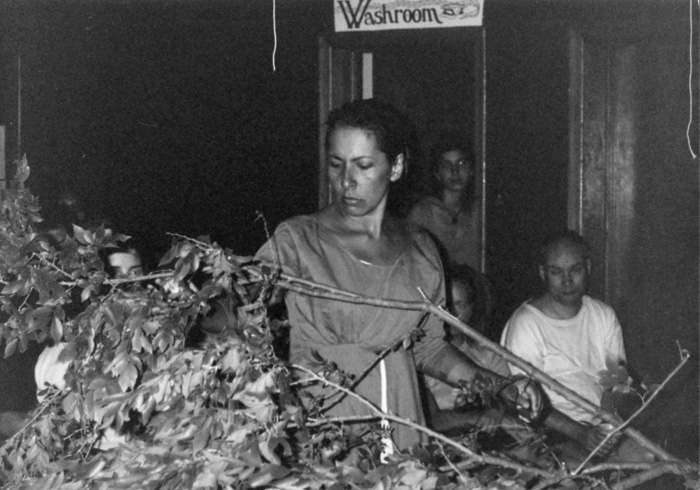
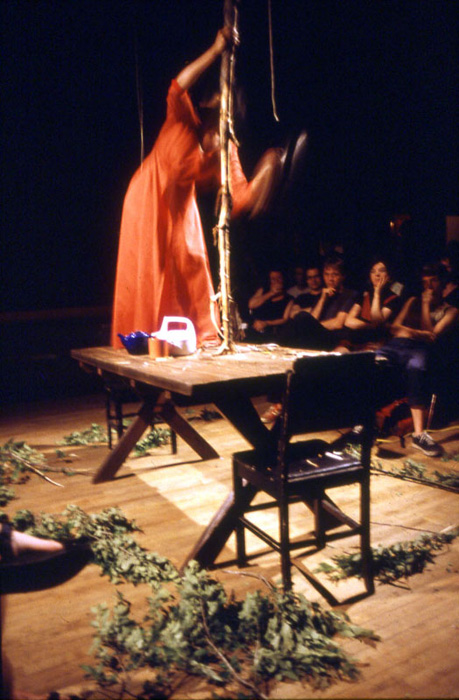

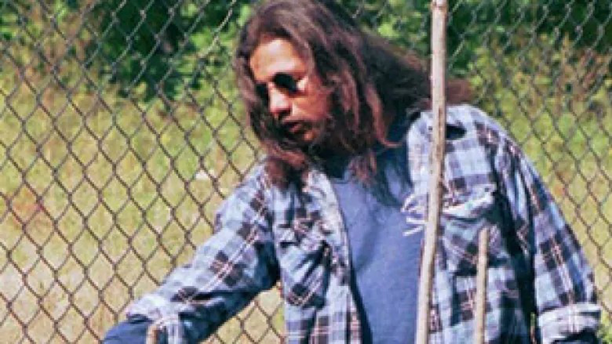
Several performances later, the evening ended with For Dudley, a piece by Rebecca Belmore that expressed what could not be said with words alone—a confusing and overwhelming rush of emotions at the tragic shooting of Dudley George at Ipperwash. Periods of silence were punctuated by repeating strains of a ’60s pop song (“Bang bang/He shot me down/Bang bang/I hit the ground/Bang bang/He shot me down/Bang bang/My baby shot me down”) as Belmore stripped a tree of leaves, branches and bark. Powerful, violent, and burning with white-hot focus, her presence galvanized the audience’s attention. Having stripped the tree naked of its skin, she used it as a pole on which to hang the shift she was wearing, creating a screen for a projected image of Dudley George. Then Belmore sat at a table with her teacup, her naked body both a metaphor for the nakedness of her emotion and a simple statement of the fact of our common humanity, what we all share—meat, blood, bone. In that moment, the performer seemed utterly unselfconscious, simply present.
Paul Couillard, 7a*11d Performance Art Festival review, 1997
Photo credit: Cheryl Rondeau / 7a*11d, Tony Pitts / Port Huron Times Herald/CP (Dudley George)
Crimes of Passion in Paradise and Beyond
2002 / Centre for Caribbean Contemporary Art, Port of Spain, Trinidad
Two fresh coconuts. One machete. White sheet. Small portable CD player. Alejandro Escovedo’s tune Across the River. Large metal mixing bowl holding a round stone. Four litres of wine and four litres of milk. Four bare lightbulbs on the floor. Newspaper with article and picture of a young mother who was macheted to death with her infant.
Photo credit: Brian Walsh
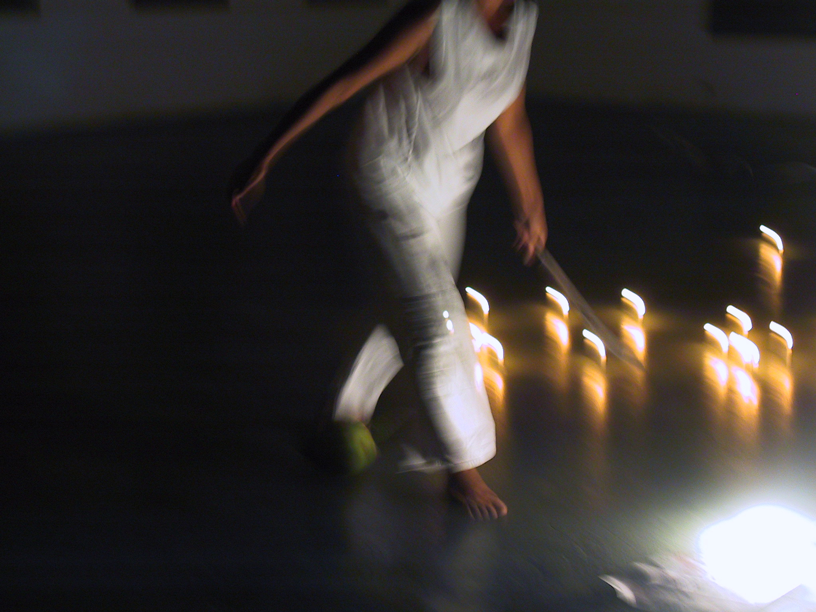
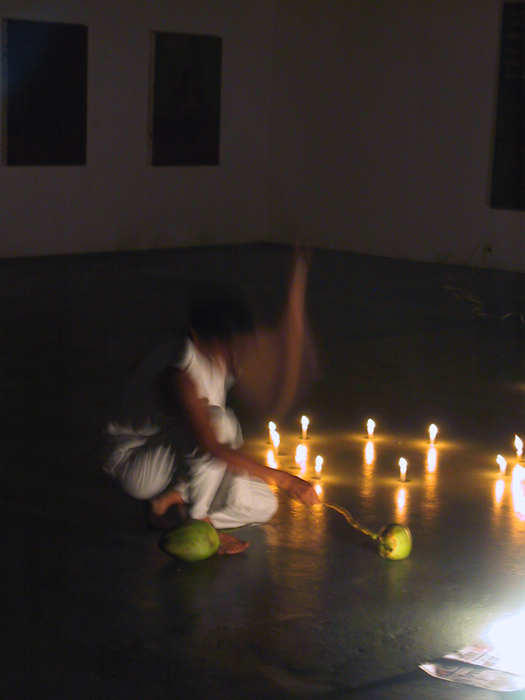
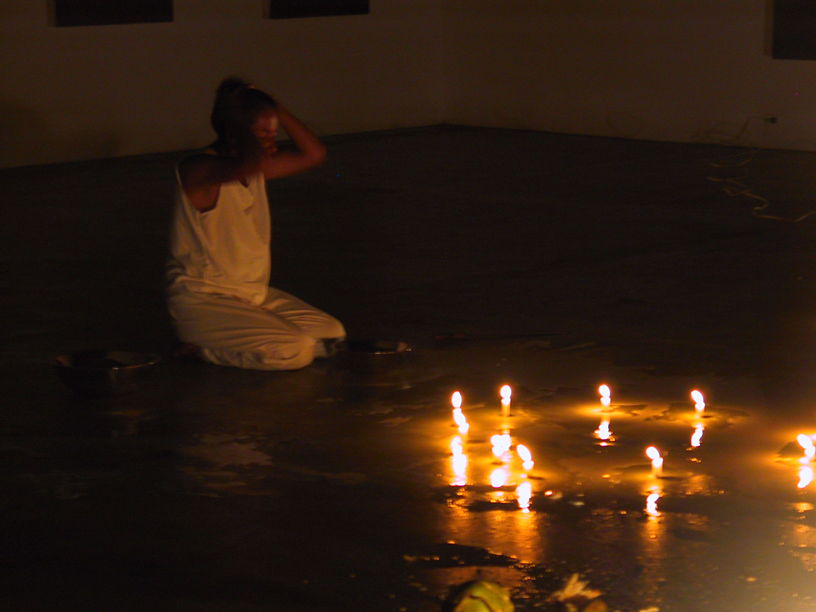
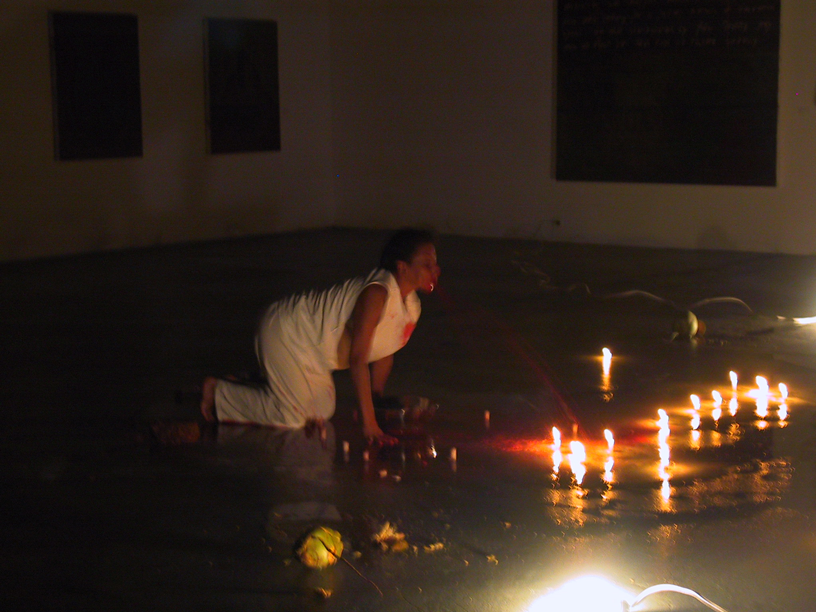
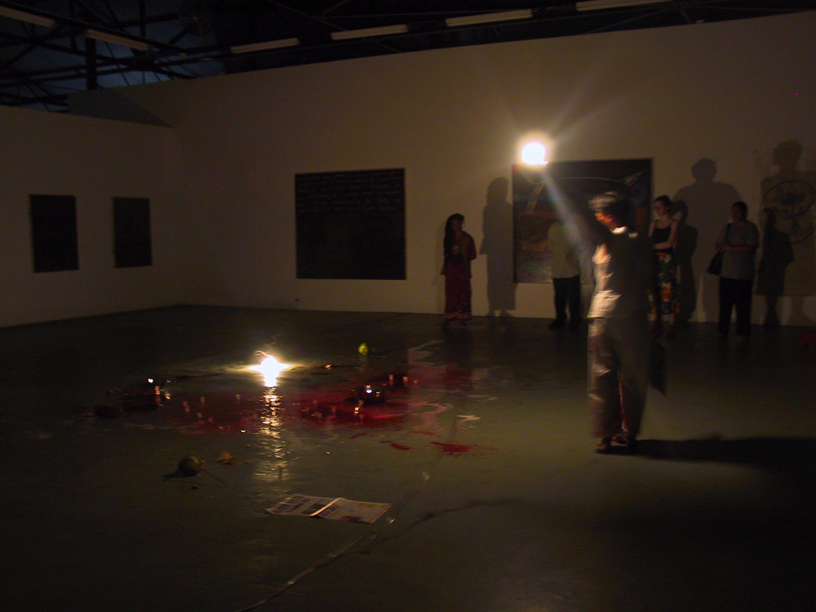
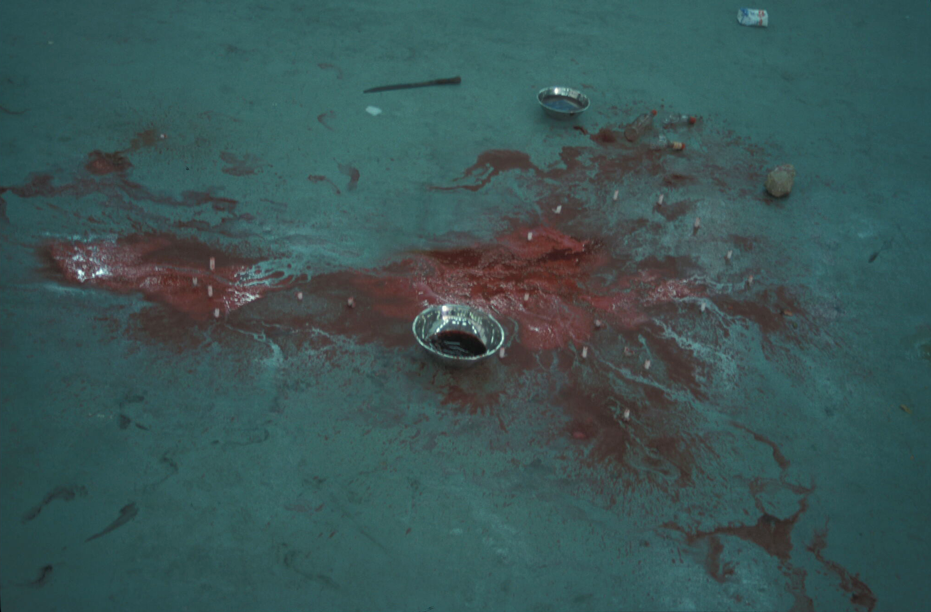
Two fresh coconuts. One machete. White sheet. Small portable CD player. Alejandro Escovedo’s tune Across the River. Large metal mixing bowl holding a round stone. Four litres of wine and four litres of milk. Four bare lightbulbs on the floor. Newspaper with article and picture of a young mother who was macheted to death with her infant.
Photo credit: Brian Walsh